
The growing rift between MSIL and rival automakers has complicated the government's efforts to finalise the CAFE norms.

'If Washington has to balance Chinese power, she will have to turn to the third biggest power in the world which is India.' 'The United States and India will have to work together in order to keep Chinese ambitions in check.'

The technology-driven futures trading in gold and silver would fulfill its objectives only if poor farmers and small goldsmiths benefit from it, Sharad Yadav, minister for consumer affairs, food and public distribution, said in New Delhi on Friday.

The MiG-21 episode demonstrates that procurement is always strategic.
Choices about what aircraft to acquire, who builds them, who supplies the spares, who trains the pilots and technicians are decisions with political consequences lasting for decades.
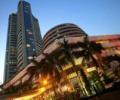
While the BSE is holding a special trading session to test its disaster recovery software, NSE conduct a special live trading session in capital market segment and future options and SLB segments.

While most investors brush off NFOs like spam, some of them offer solid opportunities, especially when you know what to look for. So let's clear the confusion around NFOs and figure out when they're worth your money, and when they're not.

Understand the pros and cons of SGBs before rushing to invest in them based on past returns.

'9 September saw Kathmandu and other key cities under the control of goons.' 'There was no authority, the police was nowhere.' 'The crowds torched all three centres of the state -- the supreme court, parliament and the Singha Durbar government headquarters.' 'The army stayed aloof from the complete destruction of these edifices, which is less than a kilometre from its headquarters.'

'The lesson Beijing would have learned is that there is, cost-benefit wise, no better option than to keep the Pakistan military supplied with its most advanced armaments, certain that in hostilities with India these would be used for maximum effect.'
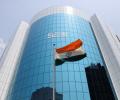
The Securities and Exchange Board of India's (Sebi's) six-step plan to curb retail participation in speculative index derivatives may lead to a substantial drop in volumes - potentially by 30-40 per cent. These measures aim to reduce excessive speculation in the futures and options (F&O) segment, where daily turnover often exceeds Rs 500 trillion and retail investors end up on the losing side of the trade more often. Sebi has decided to increase the contract size from Rs 5 lakh to Rs 15 lakh, raising margin requirements and mandating the upfront collection of option premiums from buyers.

Dubai is positioning itself as a springboard for Indian companies looking to tap into fast-growing emerging markets, including Africa, banking on low tariffs, long-standing trade relations, and a shared vision for regional economic growth, said Mohammad Ali Rashid Lootah, president and chief executive officer, Dubai Chambers, at the Dubai-India Business Forum in Mumbai.

By threatening to punish India with high tariff, Trump is actually planting a tantalising thought in the Indian mind that the Modi government should suitably 'incentivise' him, explains Ambassador M K Bhadrakumar.

Analysts believe Tesla will first focus on building the Model Y brand before expanding -- both in terms of volume and models.

Sources said HDFC Bank and Canara Bank would act as clearing houses. DSE had completed the demutualisation process in 2007 by selling 55 per cent stake to investors.

If you redeem your investments when prices have fallen sharply, you will be selling at low prices and may make a permanent loss. On the other hand, if you remain patient and remain invested, you give your investment the time to recover, says Dwaipayan Bose

The National Stock Exchange (NSE) of India is going to indefinitely defer the internal deadline set for extending trading hours, according to sources in the know. The exchange aimed to introduce a three-hour evening session exclusively for index derivatives by March 2024, contingent upon regulatory clearance from the Securities and Exchange Board of India (Sebi). Sources indicate that the market regulator has not provided a favourable indication, dimming optimism surrounding the proposal.
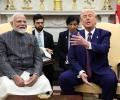
US President Donald Trump and Indian Prime Minister Narendra Modi met in Washington D.C. to discuss a range of issues including trade, defense, and energy. The two leaders announced plans to finalize "wonderful trade deals" for both countries, and Trump emphasized the need for India to purchase US oil and gas. Modi congratulated Trump on his second term and highlighted the importance of working together to further strengthen the India-US relationship. The meeting also addressed the ongoing conflict in Ukraine, with Modi reiterating India's commitment to peace.

Indian refiners are likely to import 2-2.2 million barrels per day of Russian crude oil in June - the highest in the last two years and more than the total volumes bought from Iraq, Saudi Arabia, the UAE and Kuwait, preliminary data by global trade analytics firm Kpler showed.

The government on Friday proposed hiking the securities transaction tax on Futures & Options (F&O) contracts, a move that will increase the trading costs in the derivatives segment as well as help in curbing excessive trades. In the Finance Bill 2023, passed by the Lok Sabha on Friday, the Securities Transaction Tax (STT) on options is proposed to be increased to 0.0625 per cent from 0.05 per cent and on futures contracts to 0.0125 from 0.01 per cent. Analysts opined that higher STT will shore up the government's revenues to some extent and also discourage excessive trading since a large number of retail traders are losing money in the segment.
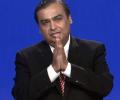
The Supreme Court on Monday dismissed a plea filed by Sebi against a Securities Appellate Tribunal order which set aside the penalty imposed by the market regulator on RIL chairman Mukesh Ambani and two other entities in a case related to alleged manipulative trading in shares of the erstwhile Reliance Petroleum Ltd (RPL) in November 2007. A bench of Justices J B Pardiwala and R Mahadevan said it was not inclined to interfere with the order passed by SAT.

US strikes on Iran's three main nuclear facilities have once again raised concerns that Tehran might shut down the Strait of Hormuz - one of the world's most critical chokepoints, through which a fifth of global oil and gas supply flows.

Many are attracted by the potential for large gains, but don't necessarily seem to understand that a single trade gone wrong can wipe out their accumulated profits.

Udaan, India's largest business-to-business (B2B) e-commerce company, has received approval from the National Company Law Tribunal (NCLT) for its internal corporate restructuring plan, according to sources. By consolidating into a single entity, the restructuring will enhance Udaan's agility and pave the way for various financing options, including the ability to pursue an initial public offering (IPO) in India by 2026, according to people familiar with the matter.

With just four trading sessions to go for the ITC-ITC Hotels demerger record date shares of ITC continue to consolidate in a thin range of Rs 460 - Rs 480 in an otherwise volatile equity market. On Tuesday thus far despite a near 1 per cent fall in the Sensex and Nifty; ITC traded on a flat note. ITC had set the demerger ratio at 1:10 - meaning 1 share of ITC Hotels for every 10 shares of ITC as of the record date January 6, 2025.

'Although China has been ruling over Tibet for past 75 years, it has no legitimacy.'
Chevron is evaluating its options regarding RPL. It owns 5 per cent stake in RPL, valued at about $1 billion.

In 2024, the Securities and Exchange Board of India (Sebi) implemented significant reforms, focusing on cooling down the derivatives segment, enhancing transparency and accountability in small and midsised enterprise (SME) listings, and deepening the fund management ecosystem.

FOMO-driven investing is reshaping India's stock market. Swati Saxena explains how social media hype fuels risky bets and how to protect your wealth.

Cash trading volume declined in 2022, even as benchmark indices outperformed their peers. The average daily trading volume (ADTV) for the cash segment fell 18 per cent year-on-year to Rs 61,392 crore (NSE and BSE combined). The ADTV for the futures and options (F&O) segment (NSE and BSE combined) stood at Rs 125 trillion (notional turnover), up 117 per cent from the previous year.

Zomato on Monday became the first new-age company to join the prestigious 30-share benchmark Sensex, replacing JSW Steel. This milestone marks a significant achievement not only for Zomato but also for the Indian startup ecosystem, which is increasingly making its presence felt in the $5.2 trillion listed ecosystem.

'Had Haji Pir and/or Skardu been taken, the message would have gone out not just to General Asim Munir and his cohort in the Pakistan army but to the Pakistani people that every terrorist incident in India would lead to substantial loss of territory in PoK.'

The rout in Adani Group stocks after US-based short seller Hindenburg Research released a report on January 24 has sparked a rebound in trading activity this month. The average daily trading volume (ADTV) for the cash segment (both NSE and BSE combined) so far in February stands at Rs 59,346 crore, and is around 15 per cent more than the previous month's tally of Rs 51,844 crore, which was the lowest in six months. The ADTV for the futures and options (F&O) segment rose to a record Rs 204 trillion (notional turnover) against Rs 202 trillion in January.

'Every decision India makes along the LoC, it must also consider implications along the LAC.'
Over 70 per cent of individual investors who engage in intraday trading incurred an average loss of Rs 5,371 during 2022-23 (FY23), according to a study conducted by the Securities and Exchange Board of India (Sebi). Intraday trades involve buying and selling securities within the same trading day. The study covered nearly 7 million investors trading in the equity cash segment.
New-age tech tools and 'mystery shoppers' are helping the country's top bourse stay ahead of the curve against dabba trading platforms and entities dolling out unsolicited investment tips. In the past one month, the National Stock Exchange (NSE) has issued close to two dozen warnings and advisories against such activities. "We saw a rise of dabba trading or illegal trading platforms after the pandemic.

Leading oil companies dedicated the second day of India Energy Week (IEW) 2025 to announcing strategic deals and business agreements across the supply chain - from sourcing more crude oil supply to deploying more domestic ships and building gas distribution capacity.

Leading brokerages have revised their charges with the true-to-label norms by the Securities and Exchange Board of India (Sebi) kicking in from Tuesday.

Adani Ports, NTPC, Infosys, Hindustan Unilever, HCL Technologies and Sun Pharma were among the other big gainers. However, Larsen & Toubro, Bajaj Finance, State Bank of India, Axis Bank and HDFC Bank were amonh the major laggards.
